



Pick the bag around what happens at both ends of the ride. A rack bag keeps the load off your back, while a backpack is easier to carry once you lock the bike. Rack compatibility, load size and laptop protection usually settle the choice.
Panniers make more sense when the daily load outgrows a small trunk bag. Convertible bags can also work if you need one bag for the bike and the walk into work.
When a rack bag makes sense
A rack bag is worth a look if your backpack leaves you hot or uncomfortable, or if the weight starts to bother your shoulders. Lunch, a jacket, tools, a lock and a change of clothes are all easier to carry on the bike than on your back.
A top-mounted trunk bag keeps the load centered and gives you one compact bag to take into work or a shop. That simplicity suits commuters who carry roughly the same kit most days.
Fit comes first. The rack platform has to support the bag, and the straps need usable rails to wrap around. Once fitted, the bag should clear the saddle, rear wheel, fender and taillight. Broad compatibility claims are useful, but they do not replace checking your own rack.
When a backpack is easier
A backpack is the straightforward option if you rotate between bikes, do not have a rear rack or spend a fair amount of time walking after you park. There is no mounting hardware to install or check before each ride.
You still carry the full load on your body. Plenty of riders are fine with that on a short commute, particularly when they want a padded laptop compartment and prefer to keep the computer with them.
If you already own a backpack, you can try carrying it on a rack or in a basket before buying a dedicated bag. Secure it properly so it cannot slide sideways, reach the wheel or bounce out.
When panniers earn the extra space
Panniers are a better fit for a laptop, work clothes, shoes, groceries or any load that makes a trunk bag feel cramped. Some include a laptop sleeve and convert into a shoulder bag or backpack off the bike.
Mounting systems vary. Some need a matching rack or adapter, and one heavily loaded pannier can feel different from a centered trunk bag. Look at how the bag attaches, how quickly it comes off, and whether the internal layout protects the things you actually carry.
Laptop protection needs its own check
Capacity alone says little about laptop protection. Compare the internal dimensions with your computer and look for a padded or suspended compartment. Without one, use a protective sleeve and think about how much vibration your route feeds through the rack.
For an expensive laptop, use protection that matches the route and the value of the computer. A general-purpose rack bag should not be treated as a laptop bag unless its design or test results support that use.
Match the bag to the commute
| Commute | Setup worth considering |
|---|---|
| Short ride, light load, no rack | Backpack |
| Rear rack, lunch and a jacket, want a free back | Top-mounted rack bag |
| Laptop, clothes and a larger load | Pannier or convertible commuter bag |
| Frequent stops and repeated removal | Compatible quick-release rack-and-bag system |
| Not sure it will fit | Measure the rack and check strap paths and clearances |
Where the ROCKBROS RideMate 16L fits
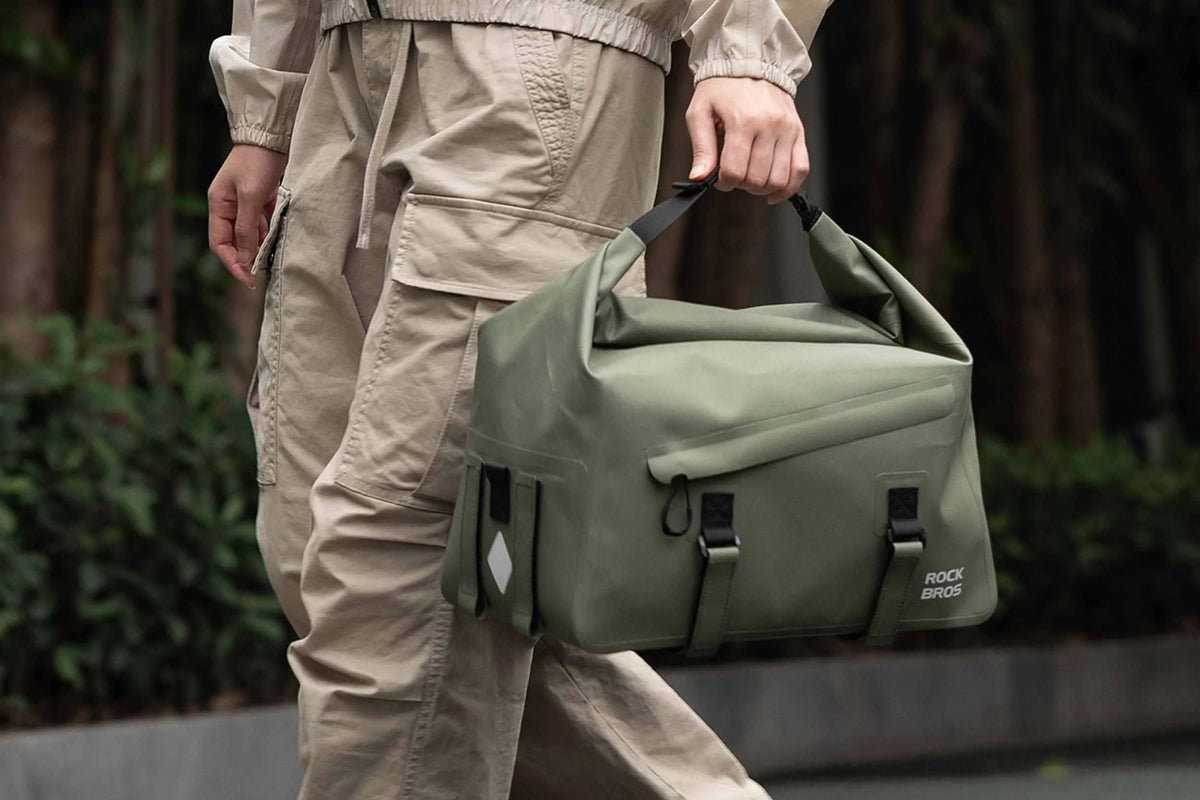
The ROCKBROS RideMate 16L is a 16-liter top-mounted rear-rack bag with a roll-top closure, detachable shoulder strap and six-point Velcro mounting. It may suit commuters who already have a compatible rack, carry everyday essentials and want to take the same bag with them after parking.
It may be a poor fit if you need a dedicated padded laptop compartment, remove the bag several times a day or regularly carry more than a trunk bag can handle. Measure the rack, check the attachment points and confirm saddle, wheel, fender and light clearance before ordering.

Leave a comment
This site is protected by hCaptcha and the hCaptcha Privacy Policy and Terms of Service apply.