


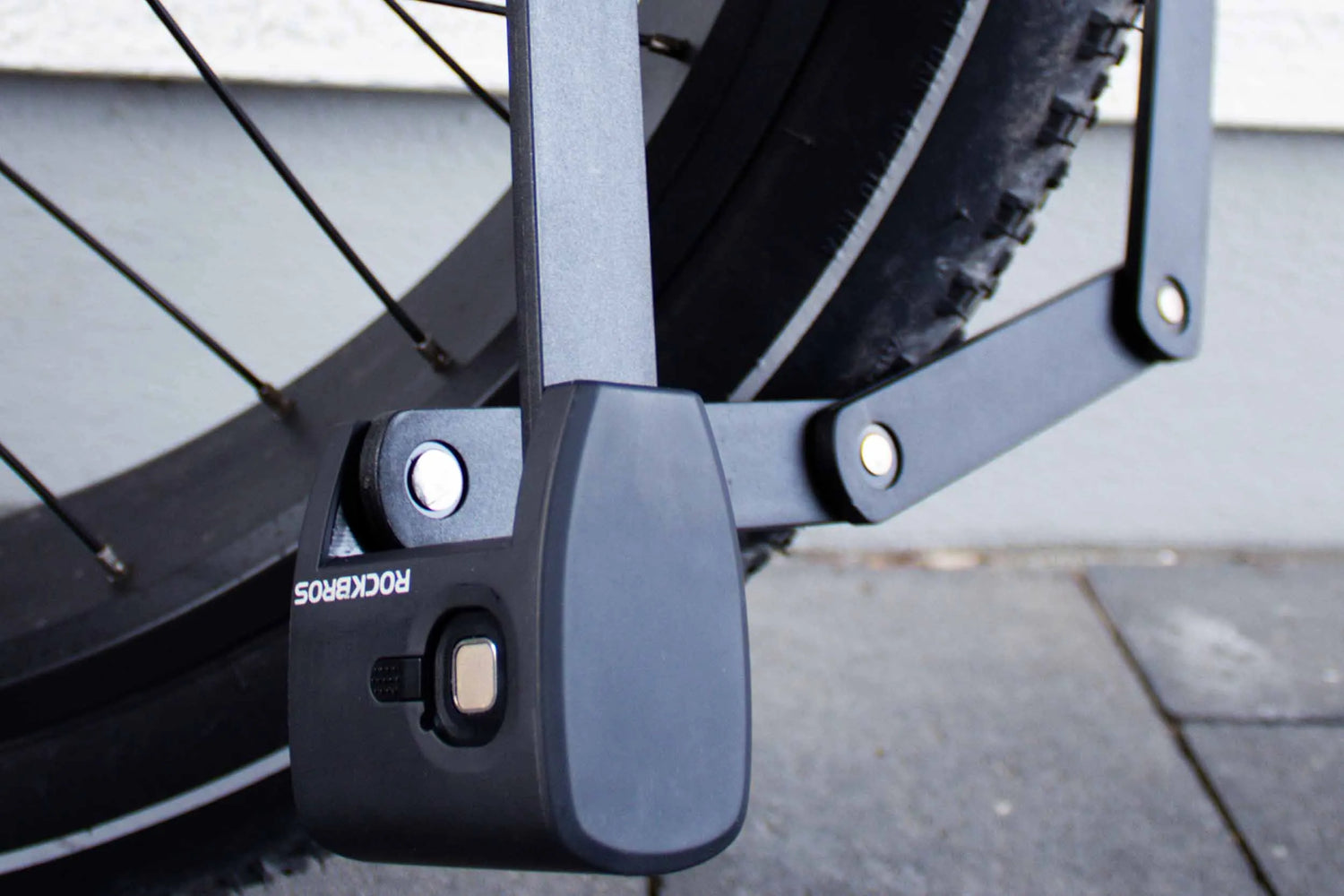
The best way to lock a bike is to secure the frame and a wheel to a fixed bike rack with a strong primary lock. Keep the lock high, tight, and hard to reach. Secure the second wheel and removable parts when the location or length of the stop calls for more protection.
No lock can make a bike theft-proof. Your goal is to make the bike harder and slower to steal, while giving a thief fewer places to attack.
Key Takeaways
- Lock the frame, not only a wheel.
- Use a rack that is firmly attached and cannot be lifted out of the ground.
- Fill as much of a U-lock's open space as practical.
- Keep the main lock away from the ground.
- Secure both wheels on higher-risk or longer stops.
- Remove easy-to-grab accessories, especially from an e-bike.
- Match the setup to the location, bike value, and time away.
If you still need to compare lock styles and security levels, start with our guide to choosing the best bike lock. This article focuses on using a lock correctly after you have chosen one.
Table of Contents
How to Lock a Bike in 9 Steps
1. Choose a visible parking spot
Look for a busy, well-lit area where people regularly pass by. Park near the entrance of your destination when possible. Avoid hidden corners, empty side streets, and places where a person can work on a lock without being noticed.
Location does not replace a good lock, but it changes the conditions around the bike. The San Francisco Police Department recommends locking in a well-lit, high-traffic area.
2. Inspect the rack before using it
Use a purpose-built rack that is anchored to the ground or a building. Tug it. Check for loose bolts, cuts, or a top that lets the bike and lock slide off.
Do not rely on a small tree, chain-link fence, wooden rail, or removable signpost. Do not block a sidewalk, doorway, accessibility route, or emergency exit. The New York City Department of Transportation advises riders to use a bike rack and avoid objects that can be easily cut.
3. Put the bike close to the rack
Place the bike so the frame sits next to the rack without stretching the lock. A large gap gives more room to insert tools.
If the rack is crowded, do not lock your bike to another bike. Check that your lock does not trap another rider's frame, cable, or wheel.
4. Secure the frame first
Pass the primary lock through a closed part of the frame, such as the main triangle, and around the rack. Never lock only a wheel. A wheel can be removed while the rest of the bike is taken.
On a step-through frame, use the seat tube, head tube area, or another enclosed frame section that fits safely. Do not route the lock around a brake hose, shift cable, spoke, or suspension part.
5. Include the rear wheel when it fits
With a correctly sized U-lock, you may be able to capture the rear wheel, frame, and rack together. Pass the lock through a structural part of the frame and the rear wheel, then around the rack.
Confirm that the frame itself is inside the lock. Spin the wheel slightly before leaving to make sure the lock is not pressing on the valve, rotor, or spokes.
6. Remove empty space and keep the lock high
Use the smallest lock opening that fits the job. Position the crossbar or locking body away from the ground. A lock resting on pavement can be easier to strike or brace against.
Keep the keyway in a position you can reach, but avoid leaving it facing upward where rain and dirt can settle. Never force the shackle at an angle. Close it fully and pull on it to confirm it has latched.
7. Secure the front wheel
Quick-release wheels need special attention. For a brief stop in a lower-risk location, a secondary cable through the front wheel is better than leaving it unsecured. For a longer or higher-risk stop, use a second substantial lock.
Two locks can cover more of the bike and remove the unsecured-wheel weak point. Browse the bike lock collection if your current setup cannot secure the frame and both wheels.
8. Remove or secure accessories
Take lights, bags, helmets, pumps, cameras, and clip-on computers with you. If your saddle or wheels use quick releases, replace them with locking hardware or secure them with a suitable secondary device.
For e-bikes, follow the maker's directions for the battery and display. Remove them if they are designed for routine removal and you can carry them safely. Locking the battery to the bike with its built-in key is useful, but it does not secure the frame to the rack.
9. Perform a final pull test
Before walking away, check the whole setup:
- Pull each lock to confirm it is closed.
- Confirm the frame is captured.
- Make sure the rack cannot release the bike from the top.
- Check that no lock presses on a rotor, spoke, cable, or valve.
- Take your key and removable accessories.
- Save the parking location on your phone if the area is unfamiliar.
This last check takes seconds and catches common setup errors.

How to Use Each Type of Bike Lock
U-lock
A U-lock works best when its shackle closely fits the bike and rack. Put the frame and, when space allows, a wheel inside the shackle. Do not use the U-lock only around the top tube. That leaves both wheels exposed and may give an attacker more working room.
Small U-locks leave less empty space but fit fewer racks. Measure the frame, tire, and racks you use before buying.
Chain lock
Wrap a chain through the frame and wheel, then around the rack. Pull it snug and keep the padlock or locking head off the ground. Do not let a heavy chain hang on a brake hose or scratch a carbon frame. A sleeve helps protect paint, but it is not a security rating.
Folding lock
Route a folding lock through the frame and around the rack without twisting its joints. Folding locks can reach around larger objects, but the segments and joints create a fixed path. Test the reach at home so you know which part of the frame will fit.
Cable lock
A cable is useful for securing a wheel, helmet, or low-value accessory as part of a layered setup. It should not be treated as the main lock for a valuable bike in a theft-prone area. The SFPD bicycle theft guidance specifically advises against relying on a cable or lightweight chain as the primary lock.
Frame lock
A frame lock, also called a wheel lock, blocks the rear wheel from turning. It is convenient for a very short stop, but it does not attach the bike to a fixed object. Pair it with a compatible chain or a separate primary lock.
Match the Locking Setup to the Stop
Risk depends on more than the neighborhood. Time, visibility, bike value, repeat parking habits, and access to tools all matter.
| Scenario | Main concern | Practical setup |
| Quick daytime stop in view | Opportunistic removal | Frame and rack with a primary lock; secure a quick-release front wheel |
| Commuter parking for several hours | More time to attack locks and parts | Strong primary lock plus a second lock for the other wheel |
| Transit station or repeat daily location | Predictable routine and longer exposure | Two different lock types; vary the rack when possible; remove accessories |
| E-bike parking | High bike value and removable electronics | Frame and rack with a primary lock; second lock for a wheel; remove display or battery if appropriate |
| Overnight outdoor parking | Long, low-supervision exposure | Bring the bike indoors when possible; outdoor locks cannot remove the risk |
A rating can help compare locks, but only within the rating system that issued it. For example, Sold Secure tests products and lists approved locks by rating. Check the exact model in the certification database rather than relying on a similar product name or package color. If you're looking for a tested option, ROCKBROS also offers a bike lock with a Sold Secure rating—check out the ROCKBROS Sold Secure bike lock for added peace of mind when securing your bike.
How to Secure an E-Bike
An e-bike often has a thicker frame, larger tires, and more removable parts. Plan the lock route before your first public stop.
Lock the structural frame
Secure a main frame member to the rack. Do not lock only a rear rack, basket, fender stay, wheel, or removable battery handle. These parts may not keep the bike attached.
Check tire and frame clearance
Fat tires and step-through frames may not fit a compact U-lock in the usual way. A longer U-lock, chain, or folding lock may provide the needed reach. More reach also creates more open space, so choose the smallest option that consistently fits your real parking setup.
Protect removable components
Use the battery lock supplied by the e-bike maker, then decide whether to take the battery with you based on the manual, stop length, weather, and safe carrying options. Remove a clip-on display if the maker intends it to be portable.
Do not carry a damaged battery or expose battery contacts to loose metal objects. The U.S. Consumer Product Safety Commission advises consumers to use the supplied charger, follow manufacturer instructions, and use products certified to applicable safety standards. Those battery safety steps remain relevant when removing and bringing a battery indoors.
Add recovery layers
Record the serial number and keep a current photo and purchase record. Registering the bike can help identify it if recovered. A hidden tracker can support recovery efforts, but it is not a substitute for a physical lock and should not be used to confront a suspected thief. Share location information with law enforcement. If this layer fits your plan, see the Find My-compatible anti-lost tracker as one optional tool.

<
Locking Bikes With Nonstandard Geometry
Some bikes need a different route:
- Step-through bike: Capture the seat tube, head tube area, or another enclosed structural section. Test that the bike cannot be pulled free.
- Carbon frame: Follow the frame maker's care instructions. Keep metal lock bodies from striking or clamping against the tubes.
- Cargo bike: Use a high-rated long chain or compatible large lock through a structural frame member. Secure valuable boxes or seats separately when removable.
- Full-suspension bike: Keep locks clear of the shock, linkages, cables, and dropper-post stanchion.
-
Bike without a usable main triangle: Use a secure structural loop or frame section, not a rack, basket, fender, or wheel alone.
At home, practice with the bike and lock before you need to park. If no secure frame section and rack fit inside the lock, use a different lock size or type rather than improvising around a removable part.
Common Bike-Locking Mistakes
Locking only the front wheel
The frame and rear of the bike can be taken after the wheel is removed. Capture the frame with the primary lock.
Using a cable as the only lock
Cables are light and flexible, but they are better suited to secondary duty. Use a more substantial primary lock when theft risk matters.
Choosing a weak anchor
A strong lock cannot help if the rack can be cut, lifted, or unbolted. Inspect the whole object.
Leaving too much room inside the lock
Extra space can make the lock easier to manipulate. Pull the bike close to the rack and use a close-fitting lock.
Putting the lock on the ground
The ground can provide support during an attack. Keep the locking body high and difficult to brace.
Ignoring removable parts
Lights, displays, quick-release wheels, and saddles may disappear even when the frame stays put. Remove or secure them.
Believing one setup works everywhere
A coffee stop and an all-day transit-station stop do not present the same exposure. Add a second lock, move to a better location, or bring the bike indoors as risk rises.

The 30-Second Bike-Locking Checklist
Before you leave, ask:
- Is this spot visible and active?
- Is the rack solid, fixed, and uncut?
- Does the main lock capture the frame?
- Is at least one wheel inside the main lock?
- Is the other wheel secured when needed?
- Is the lock snug and off the ground?
- Are lights, bags, and displays removed?
- Are the locks fully closed?
- Do I have the key?
Save this list on your phone until the routine becomes automatic.
Frequently Asked Questions
What is the safest way to lock a bike?
Use a strong primary lock to attach the frame and a wheel to a fixed rack. Keep the lock tight and off the ground. Add a second lock for the other wheel when the stop is long, the area is higher risk, or the bike is valuable. No setup guarantees that a bike cannot be stolen.
Should I lock the front or rear wheel?
Prioritize the frame. If one lock can capture the frame and rear wheel, do that, then secure the front wheel with a second lock or cable. Wheel type, lock size, and rack shape may require a different route.
Can I lock a bike by the wheel only?
You can, but you should not. Many wheels can be removed from the frame. A primary lock should always capture a structural part of the frame.
Is one U-lock enough?
It may be enough for a brief stop in a lower-risk setting if it secures the frame and a wheel. For longer stops, quick-release wheels, valuable bikes, or higher-risk locations, a second lock gives better coverage.
How do I lock a bike without a bike rack?
Look for another legal, fixed object that cannot be cut, lifted, or disassembled and does not block access. Local rules may limit what you can use. If no suitable anchor exists, choose another parking area or take the bike inside with permission.
Should I remove my e-bike battery when parking?
Follow the e-bike maker's instructions. Removal can reduce the number of valuable parts left on the bike, but you need to carry and store the battery safely. The built-in battery key does not replace a lock through the frame and rack.
Where should a bike lock sit while riding?
Use its frame mount, a stable rack bag, or a pannier. Keep it from swinging into the wheel, crank, cables, or your legs. Do not hang a heavy lock from the handlebar.
Final Thoughts
Learning how to lock a bike properly comes down to reducing as many weak points as possible. Choose a secure rack, lock the frame first, keep the lock tight and off the ground, secure both wheels when needed, and take removable accessories with you. The right setup may change depending on your bike, where you park, and how long you plan to leave it.
No lock can guarantee that a bike will never be stolen, but good locking habits combined with the right equipment can help reduce the risk. ROCKBROS offers a range of bike locks, including dual-lock options and Sold Secure-rated models, to help riders build a more secure setup for commuting, everyday stops, and longer parking.
Choose the right lock, use it correctly, and make bike security part of every ride.


Leave a comment
This site is protected by hCaptcha and the hCaptcha Privacy Policy and Terms of Service apply.