

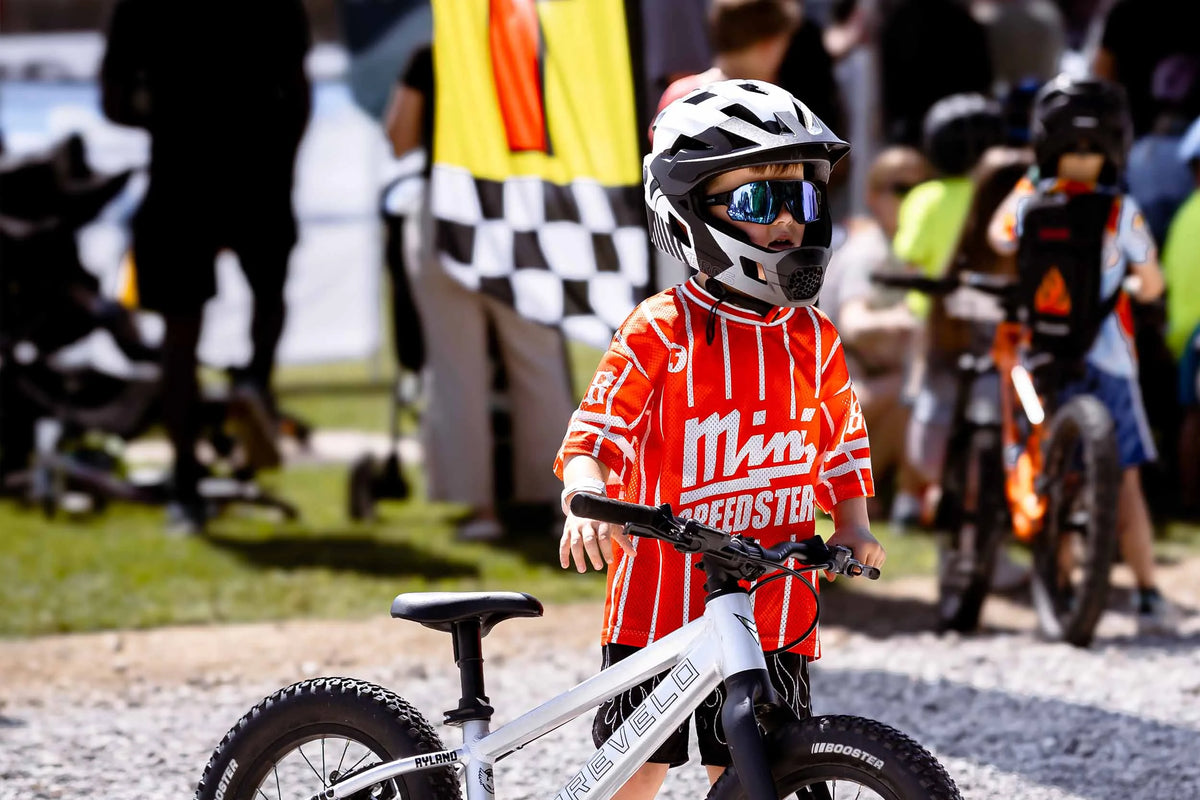
A full-face bike helmet can be a sensible choice for children riding pump tracks, practicing jumps, racing BMX, or exploring more technical mountain bike trails. For relaxed neighborhood rides and paved bike paths, a properly fitted standard kids’ bike helmet is usually lighter, cooler, and easier to wear.
The right answer depends on where your child rides, how fast they ride, the type of falls they may encounter, and whether the helmet is certified for that activity. More coverage can be useful, but only when the helmet fits correctly and your child will wear it consistently.
What Is a Full-Face Kids’ Bike Helmet?
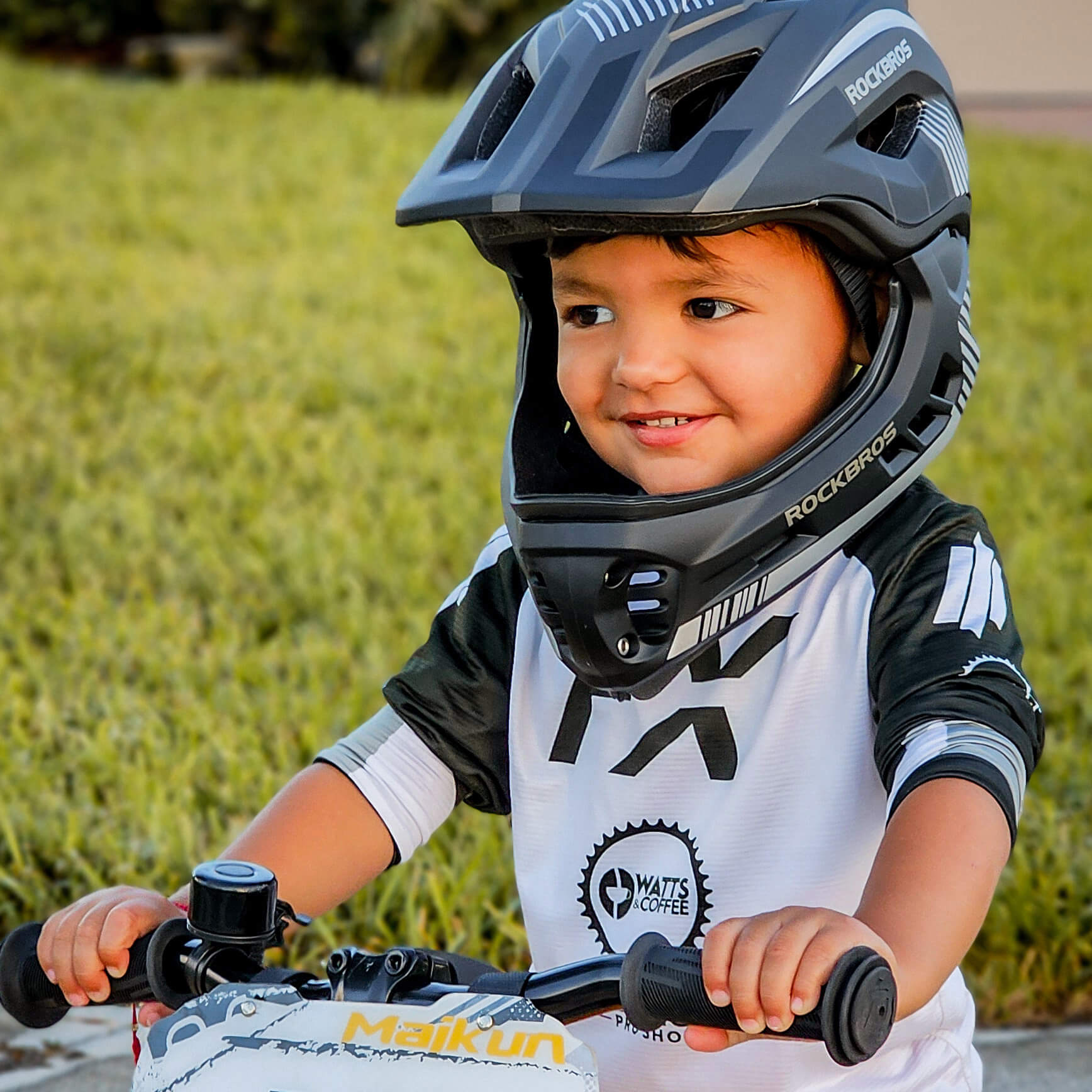
A standard bicycle helmet primarily covers the top, sides, and back of the head. A full-face bike helmet extends farther around the face and normally includes a chin bar in front of the jaw.
This additional structure is intended to provide more coverage during riding situations where a child may fall forward, leave the ground, or encounter rough terrain. However, a full-face appearance alone does not prove that the chin bar has passed a particular impact test. Parents should always check the helmet’s certification label and intended activity.
Full-face helmets are commonly associated with:
- Downhill mountain biking
- BMX riding and racing
- Pump tracks
- Dirt jumps
- Technical trail riding
- More aggressive balance-bike or mountain-bike practice
They are different from motorcycle helmets. A child riding a bicycle should use a helmet intended and certified for bicycle use rather than assuming that any helmet with facial coverage is appropriate.
When Does a Child Need a Full-Face Helmet?
Your child may benefit from a full-face helmet when the riding environment creates a greater chance of forward falls, contact with obstacles, or impacts involving the lower face.
Pump Tracks and Bike Parks
Pump tracks introduce banked turns, rollers, changing speeds, and repeated transitions. As children become more confident, they may travel faster than they do during an ordinary neighborhood ride.
A full-face helmet may be worth considering when a child is riding aggressively, attempting jumps, or regularly losing contact with the ground. Parents should also check the bike park’s helmet rules because some facilities have specific requirements.
BMX and Dirt Jump Riding
BMX tracks and dirt jumps can involve higher speeds, close contact with other riders, and harder landing surfaces. More extensive helmet coverage may be appropriate in these environments.
For racing or organized training, follow the rules established by the track, coach, or event organizer. A helmet that is suitable for casual cycling may not meet the requirements of a competitive riding discipline.
Technical Mountain Bike Trails
Rock gardens, roots, drops, steep descents, and narrow trails increase the variety of ways a rider can fall. A full-face helmet becomes more relevant as terrain and speed become more demanding.
If your child is participating in downhill mountain biking, look for a helmet specifically certified for that activity. Do not rely only on the presence of a chin bar.
Children Who Are Progressing Quickly
Some young riders move from slow balance-bike practice to pump tracks and small jumps surprisingly quickly. Watch how your child actually rides instead of choosing equipment only by age.
A cautious eight-year-old riding on a paved path may have different needs from a confident five-year-old practicing jumps. Riding style and environment are usually more useful than age alone when deciding between helmet types.
When Is a Standard Bike Helmet Enough?
A full-face helmet is not automatically the best option for every child or every ride. A certified, properly fitted standard bicycle helmet may be the more practical choice for:
- Neighborhood riding at moderate speeds
- Paved bike paths
- Family rides on easy routes
- Learning basic balance and pedaling
- Short school or park rides
- Warm-weather rides where ventilation is especially important
Standard helmets are generally lighter and more open around the face. This can make it easier for children to hear, communicate, drink water, and stay comfortable in warm conditions.
A helmet only helps when it is worn correctly. If a full-face model feels so heavy, hot, or restrictive that a child constantly loosens it or refuses to wear it, a comfortable and properly fitted standard helmet may be more suitable for low-risk everyday riding.

Full-Face vs. Standard Kids’ Bike Helmet
| Feature | Standard Kids’ Helmet | Full-Face Kids’ Helmet |
|---|---|---|
| Coverage | Covers the top, sides, and back of the head | Adds coverage around the face and jaw area |
| Typical use | Neighborhoods, paved paths, casual family rides | Pump tracks, BMX, jumps, and technical trails |
| Weight | Usually lighter | Usually heavier because of the additional structure |
| Ventilation | Generally more open | Varies by design and may feel warmer |
| Communication | Face and mouth remain completely open | The chin bar may slightly affect communication |
| What parents must verify | Bicycle certification, size, fit, and condition | Bicycle certification, chin-bar testing, intended activity, size, fit, and condition |
Neither category is universally better. The goal is to match the helmet to the riding environment without sacrificing fit, visibility, comfort, or consistent use.
Which Helmet Safety Certifications Should Parents Check?
For bicycle helmets sold in the United States, parents should look for a label stating that the helmet complies with the U.S. Consumer Product Safety Commission bicycle helmet standard.
The CPSC bicycle helmet standard evaluates areas such as impact attenuation, positional stability, retention strength, and peripheral vision. It establishes important requirements for bicycle head protection, but parents should not assume that a CPSC label automatically means a removable or fixed chin bar has passed a downhill-specific chin-bar test.
ASTM F1952 is a standard developed for helmets used in downhill mountain bicycle racing. It includes more demanding coverage and impact requirements as well as performance criteria for chin bars on full-face helmets.
Therefore:
- For ordinary bicycle riding, check for a CPSC compliance label.
- For downhill mountain biking, look for certification appropriate to downhill use, such as ASTM F1952.
- For BMX competition, check the event or track’s helmet requirements.
- Do not treat a cosmetic chin guard as evidence of downhill-level protection.
If a product page or package does not clearly state the certification, ask the manufacturer before using the helmet for a demanding riding activity.
How Should a Kids’ Full-Face Helmet Fit?
A helmet with more coverage still needs to fit correctly. A loose full-face helmet can shift and interfere with vision, while one that is too small can create uncomfortable pressure points.
Measure the Head, Not the Child’s Age
Use a soft measuring tape around the widest part of your child’s head, usually just above the eyebrows and ears. Compare that measurement with the size chart for the exact helmet model.
Age recommendations are only a starting point because children of the same age can have very different head shapes and circumferences.
Check the Helmet Position
The helmet should sit level on the head rather than tilted toward the back. It should cover the forehead without dropping so low that it blocks the child’s view.
Ask your child to look forward, up, down, and to both sides. The eye opening and chin structure should not prevent them from seeing the trail, obstacles, or nearby riders.
Adjust the Retention System
Use the helmet’s adjustment system and straps to create a snug, even fit. The helmet should move with the child’s head instead of sliding independently when they turn or gently shake their head.
The chin strap should be securely fastened according to the manufacturer’s instructions. It should not hang loose, twist, or press painfully against the neck.
Test the Complete Riding Setup
Have your child try the helmet with any glasses, goggles, neckwear, or protective equipment they normally use. Check for pressure around the temples, nose, cheeks, and back of the neck.
Do not add thick hats or unapproved padding underneath the helmet because they can change the fit and position.
For a more general helmet-fitting checklist, read How to Choose the Right Kids’ Bike Helmet.
Comfort, Ventilation, and Visibility
Comfort is not merely a convenience. An uncomfortable child is more likely to push the helmet backward, loosen the straps, or ask to remove it.
Before buying a full-face helmet, consider:
- Weight: The helmet should not cause obvious neck fatigue or repeatedly tip forward.
- Ventilation: Look for airflow openings appropriate for the weather and riding intensity.
- Field of view: The child should be able to see forward and to both sides without the helmet shifting.
- Hearing and communication: Make sure the design does not prevent the child from hearing instructions or communicating with a parent.
- Padding: Interior padding should feel even, without painful pressure points.
- Cleaning: Removable, washable padding can make regular use more comfortable.
Let your child wear the helmet indoors for several minutes before the first ride. Ask specific questions about pressure, heat, vision, and movement rather than asking only whether it “feels okay.”

Are Removable Chin Guards a Good Option?
A removable chin guard can give families more flexibility. The helmet can be used in its more open configuration for relaxed riding and changed to the full-face configuration when additional coverage is appropriate.
However, parents should understand three important limitations:
- The chin guard must be installed exactly as directed by the manufacturer.
- The connection points should be checked before every ride.
- A removable chin guard does not automatically mean the helmet meets ASTM F1952 or another downhill-specific standard.
The ROCKBROS Kids Full-Face Bike Helmet uses a detachable full-face and open-face design. Its product page lists CPSC compliance, PC and EPS construction, and two head-circumference ranges: 18.9–20.5 inches for size S and 21.3–22.8 inches for size M.
The published product information lists an approximate weight of 420–440 grams depending on size. Parents should confirm the current product specifications, certification label, fit, and intended activity before use. For specialized downhill riding or competition, verify whether the helmet meets the standard required by the trail, park, track, or event.
Common Mistakes Parents Should Avoid
Buying a Larger Helmet for the Child to Grow Into
An oversized helmet can move during a fall and may leave part of the head exposed. Choose a size that fits now and use only the adjustment range provided by the manufacturer.
Choosing by Appearance Alone
A large chin bar and aggressive styling do not prove that the helmet is certified for downhill riding. Always read the certification label and product instructions.
Ignoring the Child’s Riding Environment
A helmet appropriate for a paved family ride may not be appropriate for downhill mountain biking. Likewise, a heavy downhill helmet may be unnecessary for a short neighborhood ride.
Using a Damaged or Previously Crashed Helmet
Helmet damage is not always visible. Follow the manufacturer’s replacement instructions after an impact, and replace a helmet that has cracks, compressed foam, damaged straps, or unreliable fasteners.
Assuming More Coverage Replaces Supervision
No helmet can prevent every injury. Children still need age-appropriate routes, working brakes, suitable speed, instruction, and adult supervision.

Final Decision: Does Your Child Need One?
Consider a full-face bike helmet if your child regularly rides pump tracks, BMX courses, jumps, bike parks, or technical mountain bike trails. For casual neighborhood rides and paved family routes, a properly fitted standard bicycle helmet may provide a lighter and more comfortable solution.
Before deciding, ask four questions:
- Where will my child ride?
- How fast and aggressively do they currently ride?
- Does the helmet carry the appropriate certification for that activity?
- Can my child wear it comfortably with clear vision and a secure fit?
A full-face helmet should be selected because it matches the riding situation—not simply because it looks more protective. The best helmet is appropriately certified, correctly sized, properly adjusted, and worn on every ride.
ROCKBROS offers children’s cycling helmets and protective gear for different stages of riding, from early balance-bike practice to more adventurous trail sessions. Explore the ROCKBROS Kids Cycling Gear Collection and compare each helmet’s size, construction, certification, and intended use before making your choice.

Leave a comment
This site is protected by hCaptcha and the hCaptcha Privacy Policy and Terms of Service apply.