


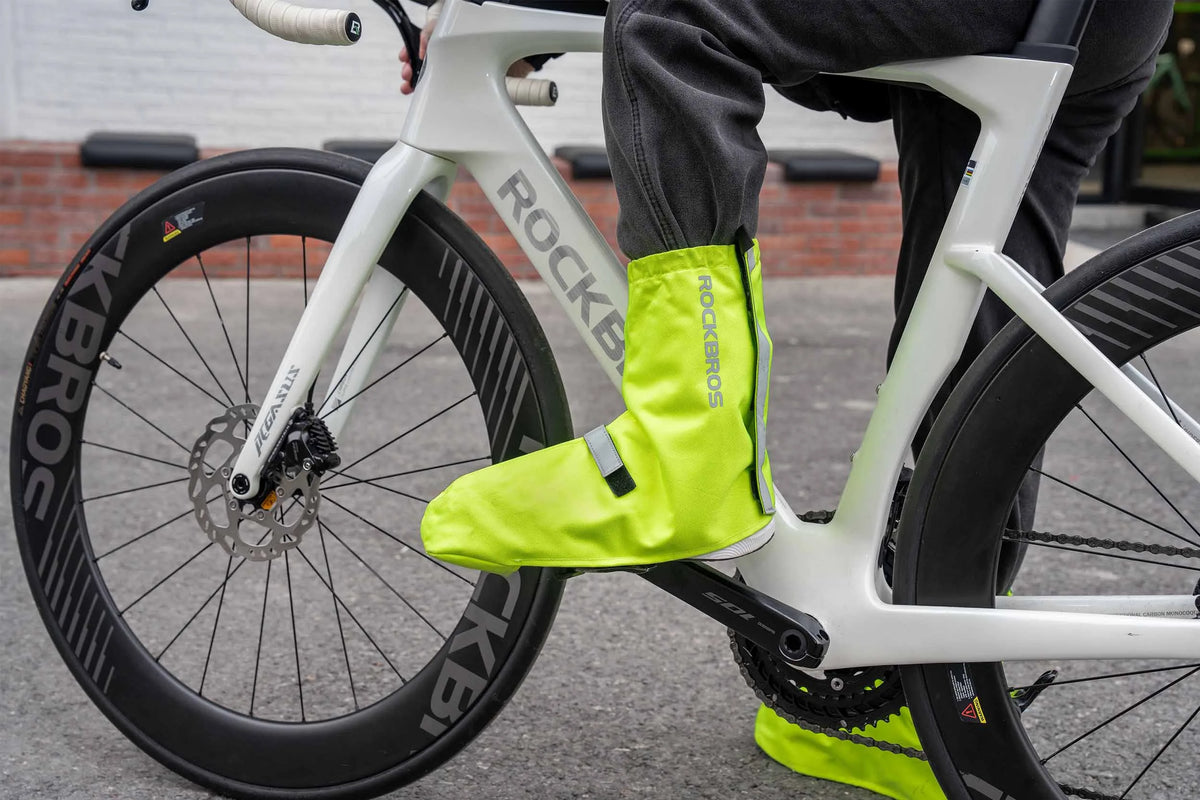
Cycling shoe covers are protective layers worn over cycling shoes to help block cold wind, road spray, and light rain. Some cover only the toe box, while others wrap around most of the shoe and extend above the ankle. They are most useful when your regular cycling shoes feel too ventilated for cool, windy, or wet rides.
The right pair depends on more than the season. Your local conditions, ride length, shoe shape, cleat system, and sensitivity to cold all matter. A lightweight toe cover may be enough for a crisp morning, while a full thermal shoe cover is generally better suited to colder or more exposed rides.
Contents
- What Are Cycling Shoe Covers?
- What Do Cycling Shoe Covers Do?
- Toe Covers vs. Full Shoe Covers
- When Should You Wear Cycling Shoe Covers?
- How to Choose Cycling Shoe Covers
- How Should Cycling Shoe Covers Fit?
- How to Put On Cycling Shoe Covers
- What Cycling Shoe Covers Cannot Do
- How to Care for Cycling Shoe Covers
- Choosing ROCKBROS Cycling Shoe Covers
- Frequently Asked Questions
What Are Cycling Shoe Covers?
Cycling shoe covers, also called overshoes or booties, fit over your existing cycling shoes. They add a barrier between the shoe and the weather without requiring you to buy a separate pair of winter cycling shoes.
Most designs leave openings beneath the shoe for the cleat and heel. This lets you clip into the pedal, but it also means a shoe cover is not a sealed boot. Its main job is to reduce exposure from the top, front, sides, and ankle area of the shoe.
Do not confuse cycling shoe covers with waterproof socks. A shoe cover goes outside the shoe. A waterproof or thermal sock goes inside it. The two products solve different parts of the same comfort problem.

What Do Cycling Shoe Covers Do?
Different shoe covers are built for different conditions, but most are designed around one or more of the following functions.
Block cold airflow
Many cycling shoes use ventilation openings that feel comfortable in warm weather but allow cold air to reach the feet on cooler rides. A wind-resistant cover helps reduce that direct airflow, especially around the toes.
Add insulation
Thermal shoe covers may use a fleece lining or thicker material to help retain warmth. Insulation is especially useful on longer rides, when repeated exposure to cool air can become uncomfortable even if the temperature did not seem especially low at the start.
Reduce road spray and light rain exposure
Water-resistant shoe covers can help shed road spray and light precipitation. However, water resistance and waterproofness are not interchangeable. Check the exact product description and construction instead of assuming every winter cover will keep feet dry in prolonged rain.
Help keep cycling shoes cleaner
A cover can reduce direct contact with dirt, grit, and road spray. This can make post-ride cleanup easier, although the cover itself will need regular cleaning.
Toe Covers vs. Full Shoe Covers
The first decision is how much coverage you need. Toe covers and full shoe covers are not simply small and large versions of the same product. They suit different riding conditions.
| Feature | Toe Covers | Full Shoe Covers |
|---|---|---|
| Coverage | Toe box and front portion of the shoe | Most of the shoe plus the ankle area |
| Best use | Cool mornings, wind at the toes, transitional weather | Colder rides, greater wind exposure, wet roads |
| Warmth | Targeted protection | Broader insulation and coverage |
| Packability | Usually smaller and easier to carry | Bulkier, depending on material and construction |
| Limitation | Heel and ankle remain exposed | Can feel too warm in mild conditions |
Choose toe covers when the front of your feet gets cold but the rest of the ride still feels mild. Choose full shoe covers when you want more complete protection around the shoe and ankle. If conditions change significantly during the day, a compact toe cover may also be easier to remove and store.
When Should You Wear Cycling Shoe Covers?
There is no single temperature at which every cyclist needs shoe covers. Wind, rain, pace, ride duration, shoe ventilation, and personal cold tolerance can change the answer. Use the conditions you actually ride in rather than relying on one universal number.
On cool, windy rides
If your body feels comfortable but cold air reaches your toes through ventilated cycling shoes, start with a wind-resistant toe cover or lightweight full cover. This is common during cool morning starts and exposed descents.
On wet roads or in light rain
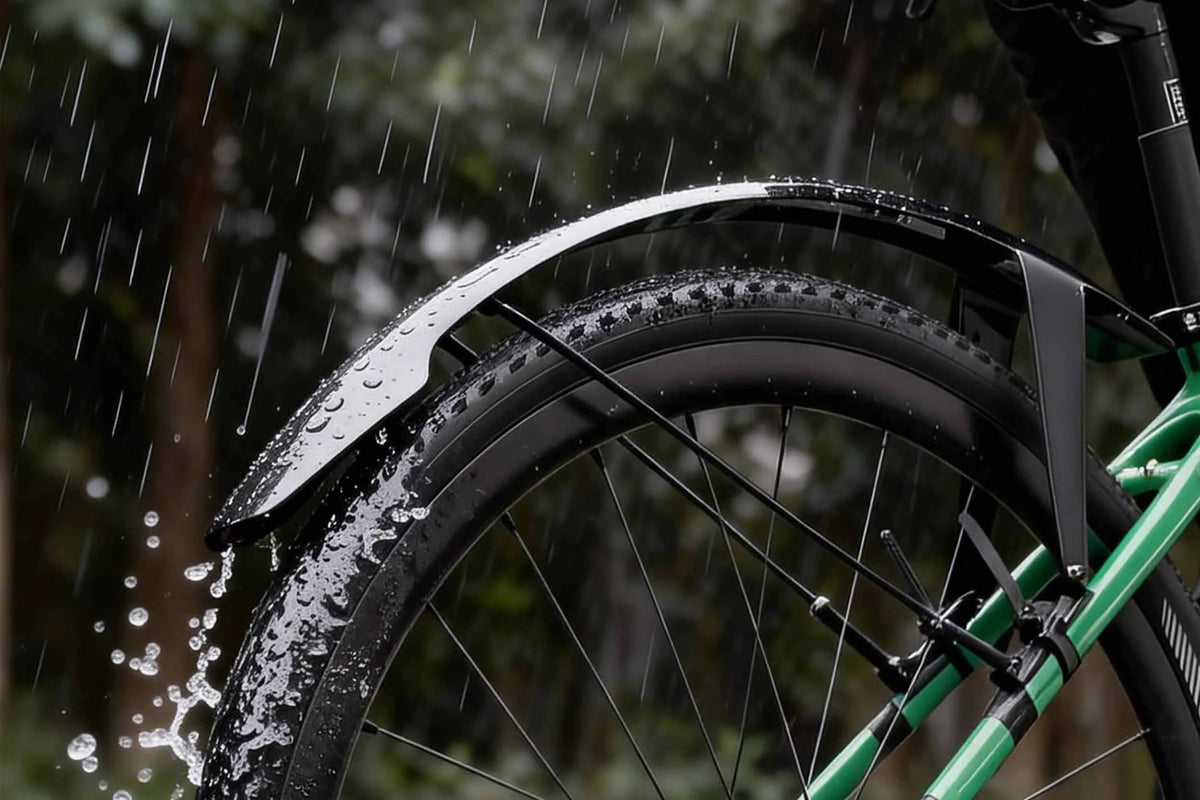
A water-resistant full cover can reduce exposure to road spray. For regular wet-weather commuting, also consider fenders because much of the water reaching your shoes may come from the wheels rather than directly from above.
During longer cold-weather rides
A short ride and a multi-hour ride can feel very different in the same weather. For longer outings, prioritize broader coverage, a comfortable cuff, and enough room inside the cycling shoe for your usual socks.
When shoe covers may not be enough
Riders who regularly spend hours in very cold conditions may eventually prefer dedicated winter cycling shoes. Winter shoes can provide more integrated insulation and weather protection, while covers remain a flexible option for riders who want to adapt their existing shoes.
How to Choose Cycling Shoe Covers
Use the following checks before buying. They prevent more problems than choosing by appearance or season alone.
1. Match the cover to the main problem
- Cold airflow: prioritize wind-resistant construction.
- Cool toes in mild weather: consider a toe cover.
- Cold-weather riding: look for full coverage and thermal lining.
- Road spray or light rain: choose a product specifically described as water-resistant.
- Frequent sustained rain: look for a rain-focused design and understand that openings around the cuff, cleat, and heel may still allow water to enter.
2. Check road, gravel, and mountain bike compatibility
Road cycling shoes usually have slimmer uppers and exposed three-bolt cleats. Mountain bike and gravel shoes may use two-bolt cleats, wider soles, and more tread for walking. A cover shaped around a slim road shoe may not fit correctly over a bulky trail shoe.
Look at the sole opening, heel opening, and overall shape. The cleat must remain fully accessible, and the cover should not interfere with clipping in or out.
3. Compare weather protection claims carefully
Windproof, water-resistant, and waterproof describe different performance goals. A fleece-lined cover can be warm without being designed for sustained rain. A rain-focused cover may block water more effectively but provide less insulation. Choose for the condition that causes the most trouble on your rides.
4. Consider walking and abrasion
Shoe covers are primarily designed for riding. Walking can place the material in contact with pavement, rocks, and pedal hardware. If you frequently walk during gravel or mountain bike rides, look for appropriate sole openings and reinforced high-wear areas.
5. Look for practical details
A zipper or adjustable closure can make a full cover easier to put on. Reflective details may improve conspicuity in low light, but they do not replace bike lights or attentive riding. A higher cuff can provide more overlap around the ankle, while a low-profile toe cover is easier to pack.
How Should Cycling Shoe Covers Fit?
Cycling shoe covers should fit snugly enough to stay in place without squeezing the shoe or foot. Loose fabric may flap, shift, or rub against the crank. A cover that is too tight can be difficult to install, strain seams, and compress the shoe around your toes.
Always use the size chart for the exact shoe cover rather than assuming that your normal clothing size will work. Then account for the shape of your cycling shoe. A wide toe box, thick tread, or bulky upper may require more room than a narrow road shoe in the same labeled size.
After installation, confirm that:
- the cleat and heel contact areas remain unobstructed;
- the cover does not touch the pedal or crank during a slow test ride;
- the cuff feels secure without digging into the ankle;
- your toes still have their normal room inside the shoe;
- you can clip in and release normally before riding in traffic.
How to Put On Cycling Shoe Covers
Construction varies, so follow the instructions supplied with the product. These general steps work for many common designs.
For most toe covers
- Insert the front of the cycling shoe into the cover.
- Stretch the lower opening around the front of the sole.
- Position the cleat opening so the material cannot interfere with the pedal.
- Smooth the upper material without overstretching it.
For full covers with a rear opening
- Open the zipper or closure fully.
- Place the toe of the shoe into the front of the cover.
- Work the material gradually around the heel and sole openings.
- Align the cleat and heel openings.
- Close the zipper or fastener without forcing it.
- Check the cuff and test pedal engagement before starting the ride.
Some tight, pull-on designs are intended to go over the leg before you put on the cycling shoe. If the product instructions specify that method, follow them instead of forcing the cover over the shoe.
What Cycling Shoe Covers Cannot Do
Shoe covers can improve comfort, but they have clear limits.
- They cannot guarantee dry feet in every storm. Water may enter through the ankle, cleat opening, heel opening, or from soaked clothing above the cuff.
- They cannot fix an overly tight shoe. Adding thick socks inside a close-fitting cycling shoe may reduce toe room and make discomfort worse.
- They do not fit every shoe. Road, mountain bike, gravel, and casual shoes can have very different sole shapes.
- They are not intended for extended walking. Frequent contact with the ground can accelerate wear.
- They do not replace visibility equipment. Reflective details are supplemental; use appropriate bike lights when riding in darkness or low light.
If you repeatedly experience unusual numbness, pain, or color changes in your feet despite adjusting fit and clothing, stop riding and seek qualified medical advice. Do not assume that another clothing layer will solve every foot problem.

How to Care for Cycling Shoe Covers
Remove the covers after the ride so both the covers and shoes can dry. Leaving damp covers on ventilated shoes can trap moisture and slow drying.
- Shake or rinse off grit before it dries into the fabric.
- Follow the product care label for washing.
- Avoid wringing, aggressive brushing, or pulling on zippers and seams.
- Air-dry away from direct heat unless the care instructions say otherwise.
- Inspect the cleat opening, heel opening, and closures for wear.
- Store the covers clean and dry before the next ride.
Reducing unnecessary walking while wearing the covers is one of the simplest ways to limit abrasion around the sole.
Choosing ROCKBROS Cycling Shoe Covers
ROCKBROS offers both targeted toe protection and full winter coverage, so the best choice depends on what you want to solve.
For lightweight protection around the front of the shoe, the ROCKBROS Cycling Shoe Toe Covers use SBR composite Lycra fabric with Kevlar fiber and are available in black or green. Because they cover the toe area rather than the entire shoe, they are a practical option for riders who mainly want protection from cool airflow at the front.
For broader cold-weather coverage, the ROCKBROS Warm Cycling Shoe Covers use a fleece lining, water-resistant and windproof construction, front Kevlar reinforcement, and reflective logo details. They are designed to cover more of the shoe and ankle than a toe cover.
Before choosing either style, compare the size chart with your actual cycling shoes and inspect the sole design for cleat compatibility. You can also view the full ROCKBROS cycling shoe cover collection to compare toe covers, thermal covers, rain-focused covers, and reflective options.
Frequently Asked Questions
Do cycling shoe covers go over or under the shoe?
They go over the cycling shoe. Socks go inside the shoe. Some tight pull-on overshoes are placed around the lower leg first and then stretched down over the shoe, so check the product instructions.
Are cycling shoe covers only for winter?
No. Lightweight toe covers can be useful on cool spring or fall mornings, while rain-focused covers may be useful in mild but wet weather. Heavy thermal covers are more appropriate for colder conditions.
Are shoe covers completely waterproof?
Not necessarily. Some models are water-resistant, while others are designed for stronger rain protection. Even waterproof material cannot eliminate every entry point around the ankle, cleat, or heel. Read the exact product description before buying.
Can I use road shoe covers with mountain bike shoes?
Only if the manufacturer confirms compatibility and the sole openings fit correctly. Mountain bike shoes often have wider uppers and more tread, which can make a road-specific cover too tight or obstruct walking surfaces.
Should I size up in cycling shoe covers?
Do not size up automatically. Start with the exact product size chart, then consider your shoe's width, sole thickness, and tread. If you fall between sizes or use a bulky shoe, follow the manufacturer's sizing guidance.
Are thicker socks better than shoe covers?
Not always. Thick socks add insulation but may make a close-fitting cycling shoe too tight. A shoe cover adds protection outside the shoe, which can help block airflow without taking up toe-box space. The best combination leaves your foot comfortable and uncompressed.
Cycling shoe covers work best when they match the problem, the shoe, and the ride. Start with toe coverage if cool airflow is the main issue. Move to a full thermal or rain-focused cover when you need broader protection. A careful fit and compatibility check will do more for comfort than choosing the thickest option available.
ROCKBROS designs practical cycling accessories for commuters, recreational riders, and year-round cyclists. Explore the shoe cover collection to build a setup that fits your conditions without replacing the shoes you already use.

Leave a comment
This site is protected by hCaptcha and the hCaptcha Privacy Policy and Terms of Service apply.